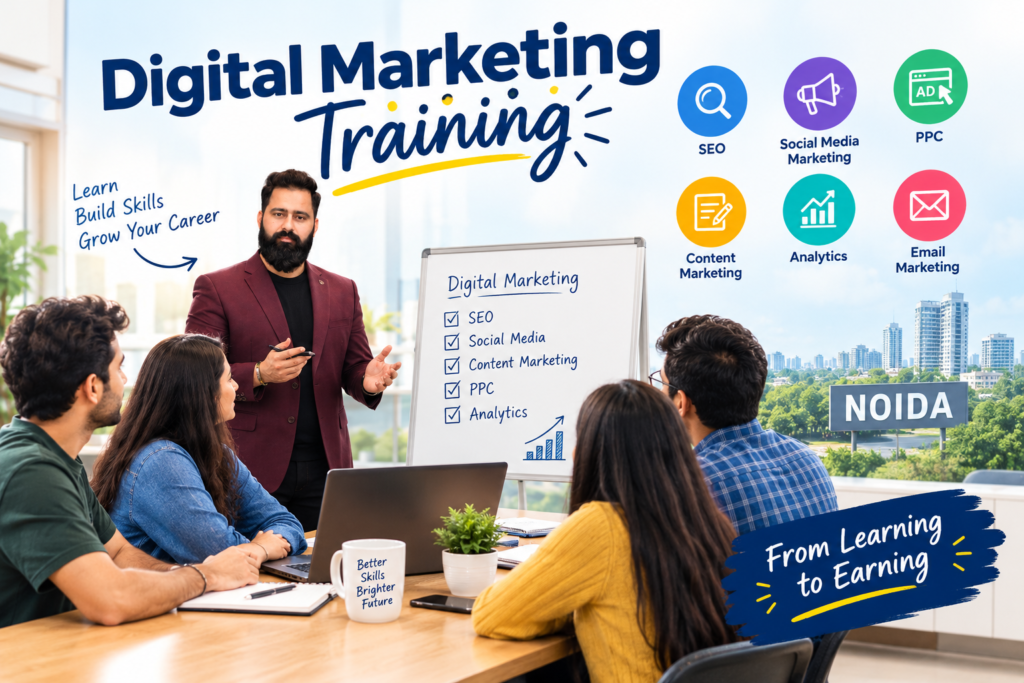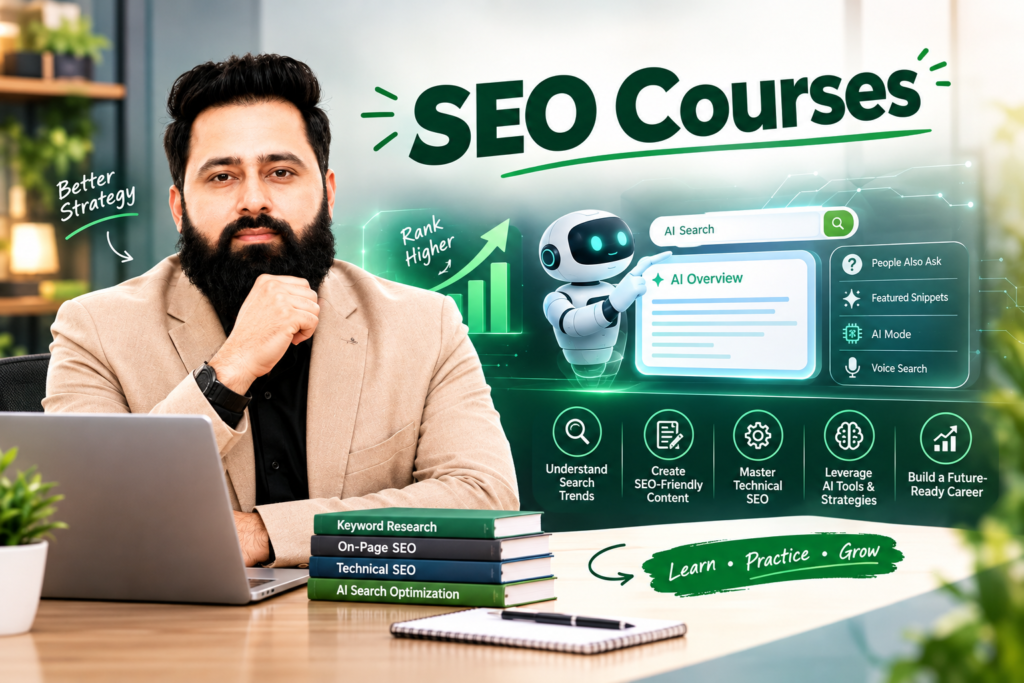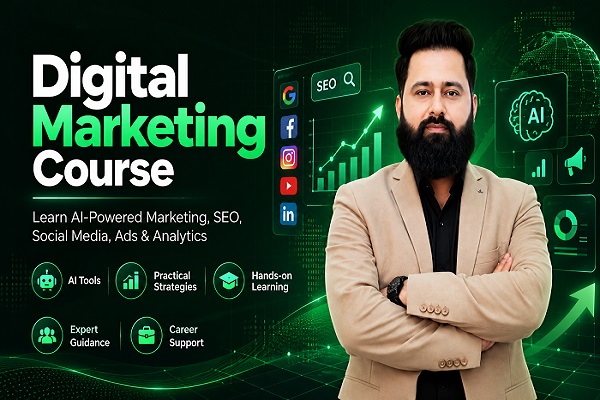
Digital Marketing is a highly rewarding career to pursue if you know how to use social media platforms and create advertisements. With our Digital Marketing Training in Noida, you will learn practical skills in SEO, Paid Advertising, Content Marketing, Social Media and Analytics.
As more and more businesses are turning to online platforms to gain new customers, trained digital marketers have many options available to them. Whether you want to work for an agency, start-up, large company or as a freelancer, having the correct training will teach you how digital campaigns work, how to analyse and track them and give you the knowledge to apply your marketing skills.
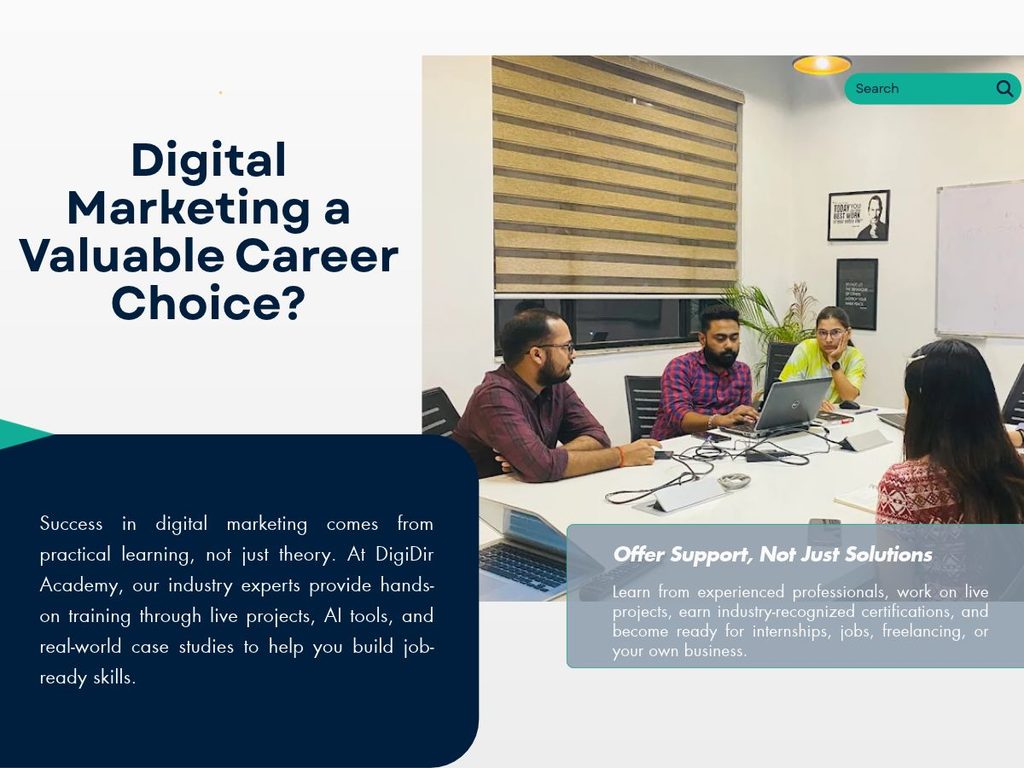
Why Is Digital Marketing a Valuable Career Choice?
Digital marketing is a way to connect companies to potential customers using search engines, social media, websites, email and online ads. This means they will need skilled individuals who can target the correct audience, create quality leads and track how effective their marketing is.
There are many benefits to pursuing a career in digital marketing:
Lots of different areas to work within: SEO, PPC, Social Media Marketing, Content Marketing, Email Marketing & Analytics.
Work across many different industries: Education, Healthcare, Retail, Technology & E-commerce.
Use data to track your campaigns: Track how much traffic, engagement, leads and conversions you are getting.
Work as a freelancer: Work with the right projects for businesses.
Constantly learn new skills: As advertising platforms, search tech and consumer behaviours change you can learn new skills.
However, how far you progress in your career will depend on how skilled you are, how well you communicate, how consistent you are and how adaptable you are to changing marketing needs.
What Skills Can You Learn Through Digital Marketing Training in Noida?
This training should be practical and cover the key concepts. The trainees will learn about the different marketing channels and how they help the business achieve its goals.
1. Search Engine Optimisation (SEO)
This helps websites rank better in organic searches. A very important skill for any business wanting to bring more targeted traffic through.
Throughout the training you will learn how to:
- Conduct keyword research and determine search intent.
- Optimise titles, meta descriptions, headings and internal links.
- Learn technical SEO, crawling and indexing.
- Plan blog content that provides value and optimise current landing pages.
- Track impressions, clicks, rankings and organic traffic.
- By auditing a website and identifying areas to improve and then developing an action plan.
2. Pay-Per-Click Advertising (PPC)
Paid advertising can be used by a business to target specific audiences using services like Google Ads and other advertising networks.
Key points to learn about:
- Campaign goals and audience targeting
- Keyword targeting and search advertising
- Writing ads and matching landing pages
- Budgeting and bidding basics
- Tracking conversions and campaign reporting
- Hands-on activities will give you an understanding of how your campaign set up, audience targeting and landing page quality will affect your advertising.
3. Social Media Marketing
Social media marketing includes developing content, brand management and using platform specific techniques.
The training should include:
- Content scheduling and campaign planning
- Choosing the right platforms for your audience.
- Organic engagement and community management.
- Basic paid social advertising.
- Measuring performance and improving your content.
For example a local business might create informative content to establish trust and use targeted campaigns to create enquiries. Knowing how they work together will help you create better campaigns.
4. Content Marketing and Copywriting
Producing useful content will help you to draw attention to your brand, answer questions and help to ensure customers can make informed decisions. Knowing how to produce this kind of content is key for marketers.
You could learn how to:
- Create SEO friendly blog posts and web pages
- Create captions and promotional content for social media
- Write email campaigns and content to nurture leads
- Create landing page content and CTAs
- Create content strategies based around your audiences needs and search intent
- Having strong writing and research skills will really help when creating content across a range of platforms.
5. Web Analytics and AI-Powered Marketing
Using data to make informed decisions in Digital Marketing. It is important to know how to understand the performance of your campaigns.
Useful topics to learn:
- Google Analytics 4 – Understand website traffic and behaviour.
- Google Search Console – Understanding Organic Search.
- Tracking conversions and leads.
- Creating reports and analysing campaigns.
- Research, planning and using AI in marketing.
Whilst using AI can help with research and productivity it is important that we check the work has been completed accurately. We need to ensure that content is original, accurate, on-brand and that data is handled responsibly.
How Does Practical Training Help You Become Job-Ready?
Practical tasks will help you gain the skills required to put your knowledge into practice.
Ensure the course includes the following:
- Auditing websites to identify technical issues, missing content and on page SEO opportunities.
- Conducting keyword research to find relevant keywords and match them to appropriate pages.
- Creating example campaigns with target audiences and clear objectives.
- Producing blog posts, social media posts and landing page copy.
- Analysing reports to suggest improvements.
- Presenting your project.
By completing these tasks you’ll be able to create a portfolio to show your skills to potential employers. If there are real life client projects available ensure students have the opportunity to complete them under supervision.
Should You Choose Classroom Learning or Digital Marketing Training Online?
Both learning formats can be effective. The better option depends on your schedule, learning preferences, access to mentoring, and opportunities for practical work.
| Factor | Classroom Training | Digital Marketing Training Online |
| Learning environment | In-person sessions and direct interaction | Remote access from a suitable location |
| Flexibility | Usually follows a fixed schedule | May offer flexible or scheduled sessions |
| Doubt resolution | Face-to-face discussions | Live sessions, chat, or online mentoring |
| Practical learning | Depends on assignments and lab access | Depends on guided projects and platform access |
| Best suited for | Learners who prefer structured, in-person learning | Learners who need location or schedule flexibility |
Before enrolling, compare the curriculum, trainer experience, practical assignments, feedback process, and support after course completion. Do not choose a programme based on its delivery format alone.
What Career Opportunities Are Available After Digital Marketing Training?
Once you have developed the necessary skills, you can look into entry level positions and develop your niche.
Some possible careers you could have are:
SEO Executive – Researching keywords, optimising pages and technical SEO to improve your websites visibility.
PPC Executive – Assisting with running paid advertising campaigns, managing budgets and tracking conversions.
Social Media Executive – Planning content, scheduling content and monitoring engagement.
Content Marketer – Creating and optimising content for your website/blog and marketing campaigns.
Digital Marketing Executive – Supporting various marketing channels and managing campaigns.
Freelance Digital Marketer – Offering your services to clients using your skills and experience.
Your first role may have a variety of responsibilities but as you gain more experience you could move into a niche area, managing bigger campaigns or moving into a strategic/leadership role. Depending on your skills, experience, location and market demand you could get employed and earn a certain salary.
How to Choose the Right Digital Marketing Training Institute in Noida
Ensure the programme has given enough guidance and practical application to build employable skills.
Check:
- Whether the full syllabus of the programme includes all core marketing channels.
- If there is practical work and analysis of performance within the course.
- What professional experience the trainers have and their teaching style.
- How any queries, assessments and project feedback will be addressed.
- What the certification entails.
- What support will be given for placements, the criteria for eligibility and any costs involved.
- How long the course will last, the cost and the support offered.
- The right institute should give you an understanding of what marketing techniques to use, why they work, when to use them and how to measure them.
Conclusion
Your dream of having a career in digital marketing can be made a reality by acquiring fundamental skills, gaining hands-on experience, and working with data. Quality digital marketing training in Noida will provide you with the essential tools to become a skilled marketer with experience in SEO, Advertising, Social Media, Content Creation, and Analytics.
Whether you are looking for digital marketing training in a classroom setting or an online course, ensure it is hands-on, provides expert guidance and a modern curriculum. One place to look is DigiDir Academy.
Frequently Asked Questions
1. Who can do digital marketing courses in Noida?
Anyone can do digital marketing courses including students, freshers, professionals, entrepreneurs or career switchers. It depends on what level of knowledge you have and what goals you want to achieve.
2. Can I learn digital marketing online?
Yes! There are lots of digital marketing courses online which can help you by providing a structured curriculum with live teaching, assignments and projects. Look into how much support and feedback is available.
3. How long does it take to learn digital marketing?
This depends on the course curriculum, how much knowledge you have going into it and how much time you spend practicing. Whilst learning the basics can take weeks or months, building up to a professional level will take more experience.
4. Do I need any coding knowledge to become a digital marketer?
No, most digital marketing roles at an entry level will not require advanced coding knowledge. However having some basic knowledge of HTML and website tech can be helpful for technical SEO and optimising websites.
5. Will doing digital marketing courses get me a job?
No course can guarantee you a job, however if they specifically state that they can then this may be the case. Having hands on skills, projects in your portfolio, communication skills, interview prep and experience will help your chances.