A digital marketing course equips students with essential knowledge about SEO, paid advertising, social media, content marketing, analytics, and AI marketing practices. As businesses embrace artificial intelligence to transform how they design, distribute, and evaluate their marketing strategies in 2026, it will be important for marketers to be familiar with both basic marketing concepts and new technologies.
At DigiDir Academy, students gain a comprehensive understanding of digital marketing, beyond a superficial comprehension of its various spheres and elements. Instead, the emphasis can be placed on building competencies that allow students to evolve with shifting consumer search trends and the rise of artificial intelligence in marketing, as well as actualise their marketing capabilities in dynamic professional environments.
Why Is AI Becoming Important in Digital Marketing?
Artificial intelligence technology is changing many aspects of marketing. Tasks that previously needed much human time and effort can now be assisted by AI, including research, ideation, analyzing data, insight generation, and optimization.
For marketers, the opportunities are not about using AI to create more content. The real value is in working more efficiently and making better decisions about marketing.
AI can support activities such as:
- Generating and organizing content ideas
- Understanding search intent
- Identifying content opportunities
- Analyzing marketing data
- Creating advertising variations
- Summarizing customer feedback
- Supporting audience research
- Automating repetitive workflows
However, AI-generated information still needs human judgment. Marketers must verify information, understand the audience, maintain originality, and decide whether an AI-assisted recommendation actually makes sense for the business.
What Does a Digital Marketing Course Need to Cover in 2026?
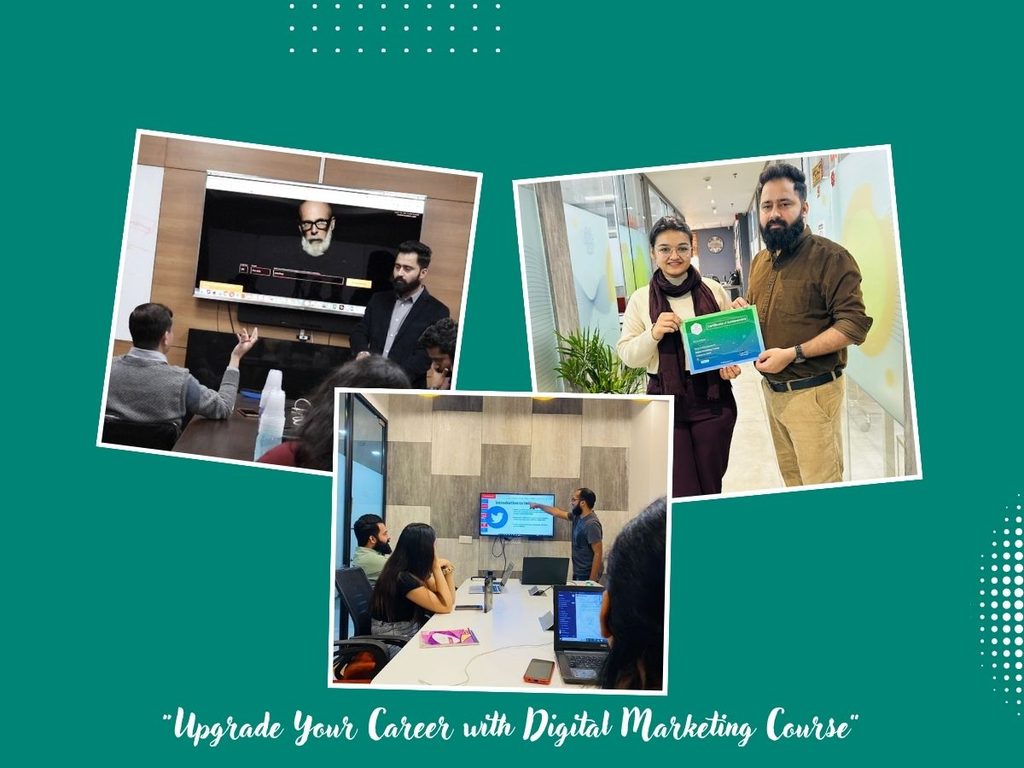
Digital marketing is no longer just SEO and social media; a good learning program should also introduce students to multi-channel marketing, analytics, and AI.
A practical curriculum may involve the following modules:
| Digital Marketing Skill | What Learners Can Understand |
| SEO | Search visibility, content optimization, technical fundamentals and search intent |
| Content Marketing | Creating useful content for specific audiences |
| Google Ads | Paid search campaigns, targeting and optimization |
| Social Media Marketing | Audience engagement and content distribution |
| Analytics | Measuring traffic, conversions and campaign performance |
| Local SEO | Improving visibility for location-based searches |
| AI Marketing | Using AI for research, ideation, analysis and automation |
| Conversion Optimization | Improving website actions and user journeys |
The objective should not be to memorize every marketing tool. Instead, learners should understand how different channels work together to achieve business goals.
How Is AI Changing SEO and Search Visibility?
Search is becoming increasingly conversational. Users can ask more detailed questions and may get more direct answers from AI-powered search experiences.
This means that SEOs need to think beyond basic keyword placement.
Good content will:
- answer questions directly
- match the search intent of the user
- show expertise
- give original and useful information
- use helpful headings and have a good structure
- cover a topic comprehensively without repeating the same things again
- Understanding how search works and how information is presented and discovered in a variety of search experiences is becoming more important for marketers.
All of these are important concepts for someone learning SEO today, but these topics are as crucial as traditional SEO activities like keyword research, on-page SEO, internal linking, and technical SEO.
How Does DigiDir Academy Approach Practical Digital Marketing Learning?
Learning digital marketing becomes more meaningful when it is related to practical applications.
Instead of learning SEO, social media, paid ads, analytics, and content creation as separate, unrelated topics, learning them in the context of how they’re applied in marketing makes it easier to understand why each is important.
For example, a business launching a new service might need:
Keyword research → SEO content → Landing page → Google Ads → Social promotion → Analytics → Conversion optimization
AI can help at various stages, but the marketer still needs to make decisions, check the results, launch the campaign, and assess the outcomes.
This combination of marketing know-how + execution + awareness of using AI is what will be more in demand in 2026.
What Should You Check Before Choosing the Best Digital Marketing Course?
Choosing the best digital marketing course should involve more than looking at a certificate or course duration.
Consider whether the program provides:
1) Practical Projects
Learners should have opportunities to work on websites, content, campaigns, SEO activities, or other realistic assignments.
2) Updated Topics
The curriculum should reflect developments in SEO, search, advertising, analytics, social media, AI, and automation.
3) Industry Tools
Students should become familiar with relevant marketing and analytics tools instead of learning concepts only through theory.
4) Analytics Training
Understanding data is essential. Learners should know how to interpret performance rather than simply generate reports.
5) AI Skills
A future-focused program should explain how AI can support research, content workflows, analysis, automation, and marketing decisions.
6) Portfolio Development
Projects can give learners practical examples to demonstrate their abilities during interviews, internships, freelance work, or client discussions.
A course becomes more useful when learners can explain what they did, why they did it, and what the results or learnings were.
Why Consider a Digital Marketing Course in Noida?
A digital marketing course in Noida would be beneficial for students, graduates, working professionals, entrepreneurs, career changers, and many more, as it offers a systematic learning path to excel in the subject.
The tech, startup, agency, and service-business ecosystem in Noida not only helps you understand various kinds of digital marketing needs but also exposes you to the different kinds of marketing requirements that exist out there.
Depending on their interests, learners can explore career areas such as:
- SEO Executive
- SEO Specialist
- Digital Marketing Executive
- PPC Executive
- Social Media Executive
- Content Marketing Specialist
- Performance Marketing Specialist
- Digital Marketing Analyst
Not every learner needs to specialize in every area. Someone interested in data may prefer analytics or performance marketing, while another learner may focus on SEO, content, or social media.
How Can Marketers Use AI Without Losing Human Creativity?
Using artificial intelligence to speed up marketing processes does not take away the need for human intellectual effort.
Take content writing, for instance. AI can assist in the creation process by providing ideas and organizing them or by offering suggestions and variations. However, a human has to do research on the topic and confirm the accuracy of information. They must also understand the audience and offer a perspective or insight that will benefit them.
A practical AI-assisted workflow can look like:
Research → Strategy → AI Assistance → Human Review → Execution → Measurement → Optimization
This approach treats AI as a productivity and analysis tool rather than a replacement for marketing expertise.
What Skills Can Students Build Through Digital Marketing Training?
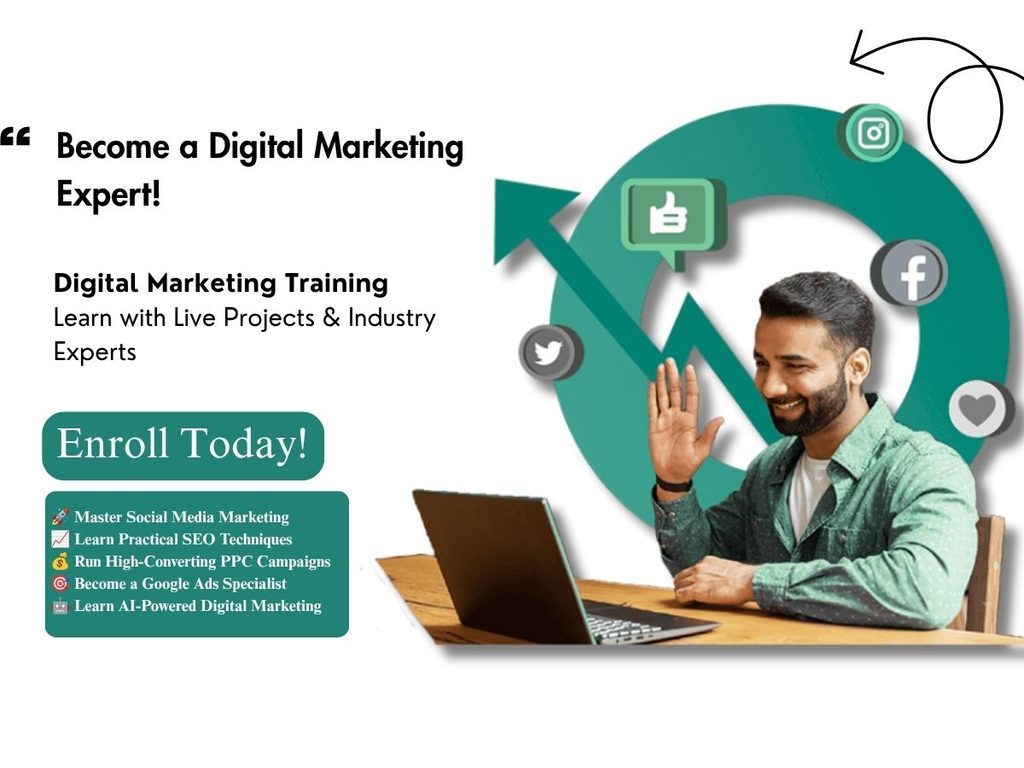
A strong background in education can aid students in acquiring core competencies and proficiencies.
- These include the following:
- Conducting keyword and competitor research
- SEO and content optimization
- Website analysis
- Google Ads fundamentals
- Social media strategy
- Content planning
- Local SEO
- Marketing analytics
- AI-assisted research
- Campaign reporting
- Conversion optimization
Moreover, interpersonal aptitudes play a critical role in determining professional efficacy. For instance, communication, problem-solving, analytical skills, and creativity, among other attributes, can determine an individual’s effectiveness in digital marketing assignments. Finally, the ability to justify marketing expenditures is another competency that students can acquire from this program.
Can AI Replace Digital Marketers?
While AI can perform specific repetitive tasks associated with digital marketing, there is much more to the process than what we can automate.
Businesses will still require competent professionals who can analyze, assess, determine, execute, strategize, and understand the customers’ needs.
Marketers, therefore, should focus on learning how to utilize artificial intelligence and allow it to do the tedious tasks it was designed for.
AI and humans can work together to make marketing more efficient and productive.
What Should Beginners Learn First?
Someone new to digital marketing does not need to master every channel immediately.
A practical learning path can begin with:
1. Marketing Fundamentals
Marketing fundamentals: understanding customers’ and target audiences’ needs and wants, researching and analyzing search intent, business objectives, and positioning.
2. SEO & Content
Search Engine Optimization, an essential part of any marketing campaign, and creating valuable content that addresses customers’ needs and search intent.
3. SEM & Advertising
Search Engine Marketing, including the basics of campaign objectives, targeting, ad formats, budget, optimization, research, and advertising.
4. Social Media
Basics of social networks and how businesses use them to market and advertise their brand, reach out to the target audience, and build relationships.
5. Analytics
Fundamentals of marketing analytics: traffic, engagement, conversions, and the necessary actions for successful campaigns.
6. AI in Marketing
The basics of using artificial intelligence in marketing: research, ideation, analysis, and automation.
7. Case Studies & Projects
Applying the knowledge in practice, training, and getting ready for a real marketing-related challenge or project and building your portfolio.
What Will Digital Marketing Look Like Beyond 2026?
Digital marketing will continue to evolve as artificial intelligence, search technologies, advertising platforms, analytics approaches, and consumer behavior change.
As a result, one of the most valuable skills will be the ability to learn, test, analyze, and adapt.
Marketers who understand fundamentals will be more agile when specific techniques or technologies evolve. The ability to work with AI technologies will then build on these competencies by enabling marketers to research more efficiently, recognize patterns, automate appropriate processes, and experiment with novel approaches.
Frequently Asked Questions
1) What is a digital marketing course?
A digital marketing course is a curriculum that trains students to gain expertise in marketing products and services through search engines, advertisements, social media, content creation, email, analytics, and other online tools.
2) Is a career in digital marketing a good choice in 2026?
Digital marketing is an umbrella term for various SEO, advertising, content, social media, analytics, and artificial intelligence careers. Multiple specializations, practical experience, and knowledge of one’s specialization influence one’s potential for success in the field.
3) How to pick an online digital marketing course?
The most important considerations are the syllabus, practical projects, tools, and trainer experience, analytical and AI-related topics, portfolio development, and course update frequency.
4) Is a course in digital marketing in Noida a good choice for a beginner?
A digital marketing course in Noida can be a great fit for a novice who wants to get acquainted with the basics of marketing and then move on to complex topics like SEO, advertising, content creation, social media, analytics, and artificial intelligence.
5) Do I need to know how to code to study digital marketing?
Most digital marketing specializations do not require extensive programming knowledge. Still, one may need to study website coding, HTML, languages specific to web design, and technical SEO for managerial positions within the field.
6) How is AI used in the field of digital marketing?
There are multiple uses of artificial intelligence in digital marketing, including but not limited to research, content creation, analysis, audience segmentation, ad variations, and curation. It is vital to keep in mind that AI is typically used as an auxiliary tool that complements human expertise.
Final Takeaway
AI is transforming the way digital marketing is strategized and executed, but understanding customers, delivering valuable experiences, analyzing data, and driving business outcomes continues to be the bedrock of the industry.
A digital marketing course that blends the basics with actionable projects and AI-powered expertise could enable students to evolve with times.
Those considering DigiDir Academy as a learning platform should instead think about building skill set and competencies that can help them understand, navigate, leverage, learn, measure, and grow within an industry that is being disrupted.
From a learner’s perspective, one cannot just rely on learning the latest and best digital marketing tools, but instead should think about investing in a capability to learn, unlearn, and relearn the marketing world, its dynamics, and the associated technologies and AI that disrupt it.